

I set one of my hats on fire and stomped on it in bitter angst, angry and frustrated that I was a loser and nobody wanted to read my fiction or true paranormal stories.
This happened just a few months ago, in June of 2026.
But I suppose I’m getting ahead of myself.
Let me go back and explain what I mean by “one of those hats.”
I’ve long worn two different book related hats, and I regularly forget that nobody asked me to choose between them. It’s something I think I keep doing to myself.
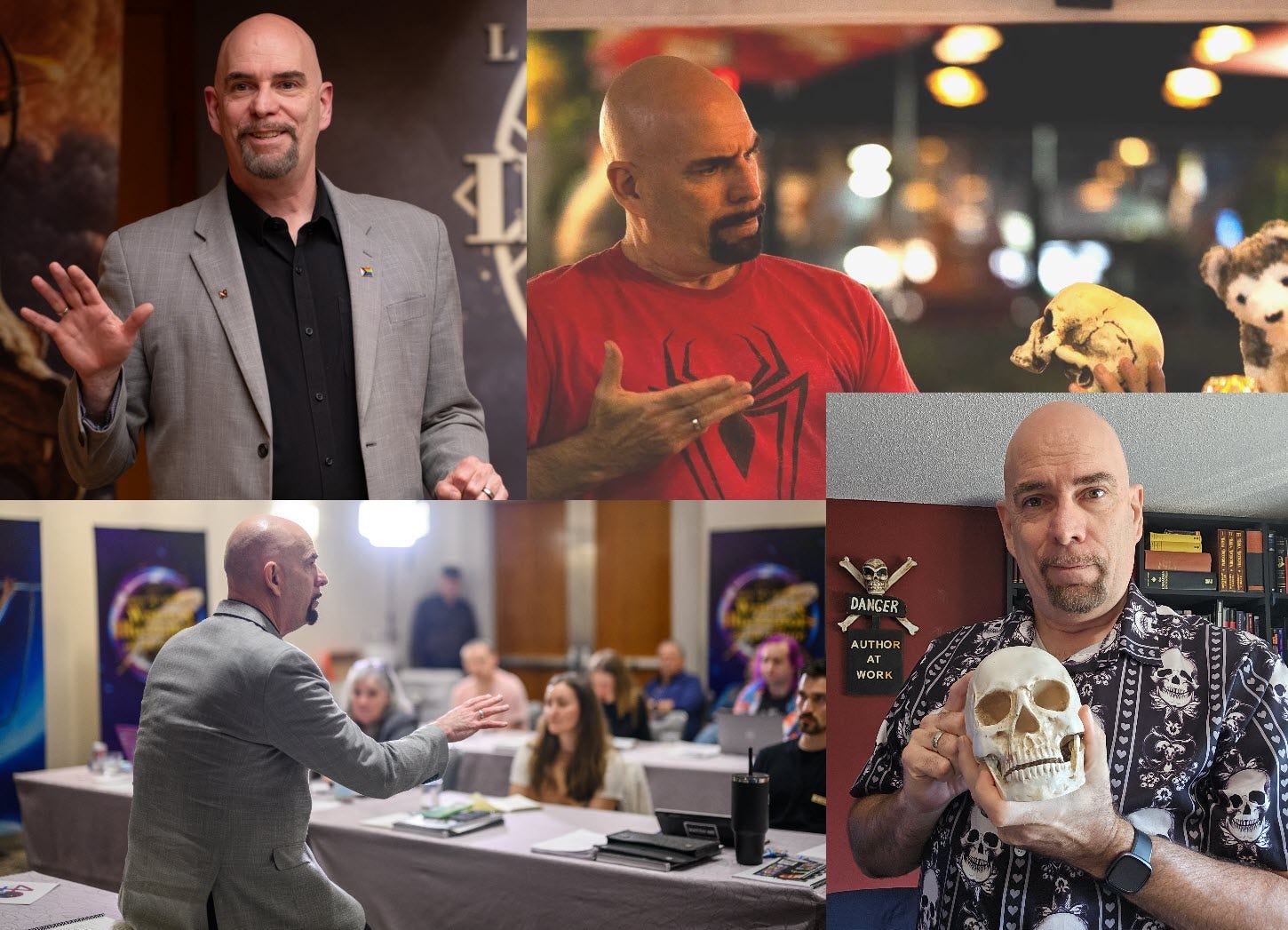
One of those hats is . . . oh, wait, I suppose I should pause to explain that I don’t often wear anything on that round shiny dome of mine. The hats I speak of are proverbial.
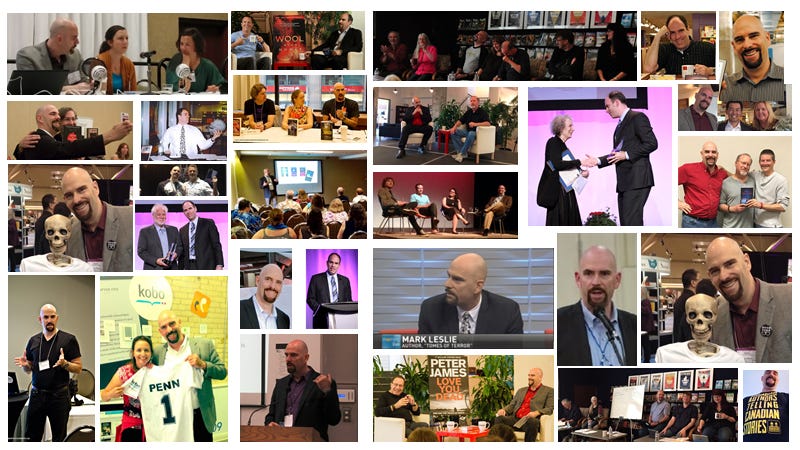
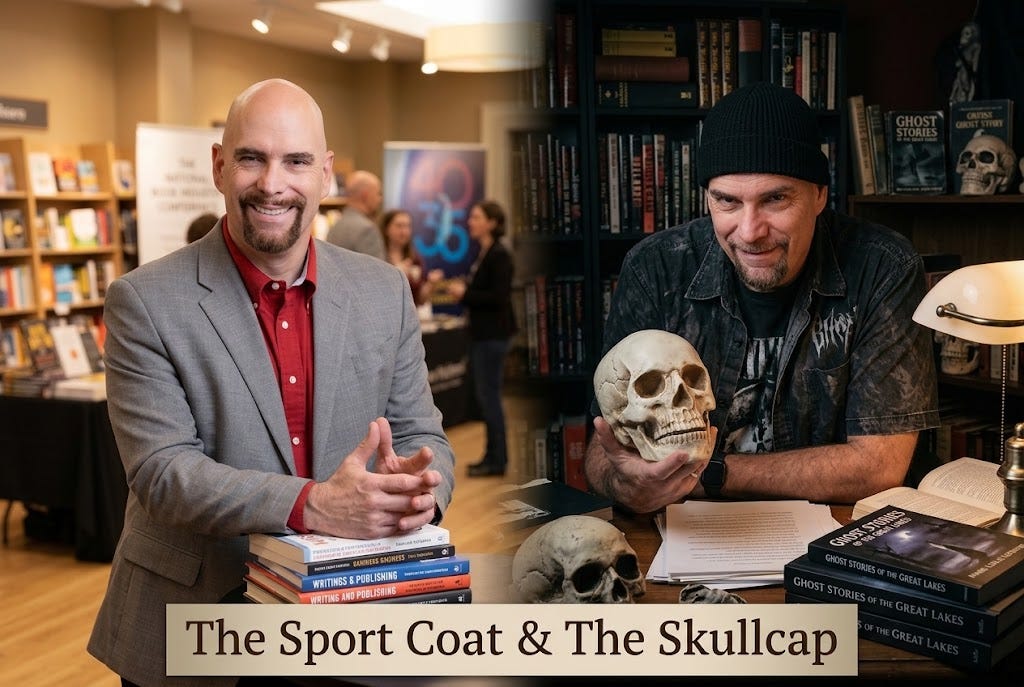
But the one hat I regularly wear is likely the reason you’re reading this. It’s often the guy you might have seen in writer spaces wearing a sports coat, and a button-down shirt. He is Mark Leslie Lefebvre. He is the guy who has spent more than thirty years in the book industry. He’s the former bookseller, bookstore manager, President of the Canadian Booksellers Association. The guy who built Kobo Writing Life. The one who is an author and industry-facing representative for the world’s leading distributor of self/indie published books, Draft2Digital. He’s the host of the Stark Reflections on Writing and Publishing Podcast. He is one of the judges for Writers of the Future. He is the guy who has been invited onto numerous podcasts and into author groups as a guest speaker. The guy who has been called upon to speak on stages in the United States, Canada, the UK, Germany, France, Italy, and Ireland.
I love that guy. And I love that hat. I get a huge intrinsic reward from assisting writers with understanding the intricacies of the business of writing and publishing. And I rarely ever feel like an imposter when I’m wearing it.
When a writer walks away from a conversation with me understanding something about the business they didn’t understand an hour earlier, that is one of the deepest satisfactions I know.
The other guy, the other hat (though, again, it’s not a hat at all) might be considered the Skullcap Mark. Unlike the Sportcoat Mark, this guy’s name is shorter and easier to pronounce. He decided, in his earliest teen years when he started this writing journey, that slicing off his last name and replacing it with his middle name, created the guise of Mark Leslie.
That guy is a horror writer. The one who loves researching and re-sharing true ghostly tales just as much as he enjoys making up scary things based on his own lifelong fear of the monster under the bed and whatever strange, unseen things might lurk in the shadows. The guy who loves to ask “what if” and craft darkly humorous tales, urban fantasy, and speculative fiction.
This is the guy who, ever since he was a kid, longed to be a storyteller. To be able to take that unique experience of being terrified while hearing a creepy tale around a campfire, and inspiring others with a sense of wonder, and a few thrilling chills.
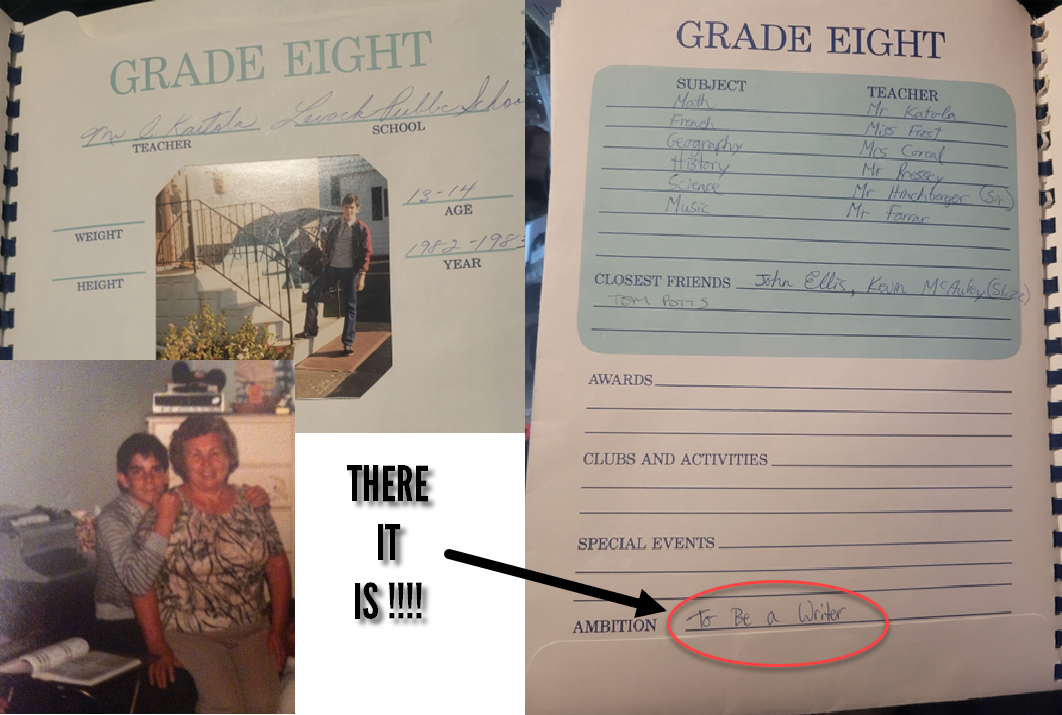
That Mark is the one I’ve dreamed the most about.
He’s the one I’ve always worked hard toward and always wanted to be.
His hat sits comfortable upon my now bald head. And I love being that guy just as much as I love being that slightly better dressed one in the sportscoat. The intrinsic reward of being that type of storyteller, being seen as the horror writer, brings a really special warmth to my heart. It’s where I also love to live. Because, after all, it’s the dream I’ve carried around the longest.
Sportscoat Mark is an interesting side-effect that resulted from the kid who always wanted to be a writer and ended up working in the book industry.
They’re both me. I love being both.
But I constantly struggle with the self-imposed idea that nobody really wants that Mark Leslie guy.
The anxiety and worry that what I have to offer as Mark Leslie is not as desired as the things I offer as Mark Leslie Lefebvre.
But here’s the thing about imposter syndrome. It not only whispers that you’re not good enough. It also manages to convince you that you already know (or think you know) what people want from you. So you stop looking.
I think I can illustrate this through two recent examples.
This summer I went to my first ever StokerCon. It’s a horror-focused conference, and one I’d never been to. I attend dozens of conferences every year. For the majority of them, I’m there as Mark Leslie Lefebvre. I’m there to represent the book industry, to assist writers with the business of writing and publishing. He’s pretty well respected and appreciated. And very few people even see or recognize that he’s also a writer with a slightly shorter name.
He often feels used. And that’s okay. He’s okay being used. He wants to be used. He wants to be useful. He is a people pleaser and he does actually truly love helping other writers.
But he feels down on himself, or at least, that Mark Leslie guy, the one who lives in the shadows of that longer named Mark.
And in the five-hour drive to Pittsburgh from Waterloo, Ontario, this summer, I spent a lot of time in my own head. I realized that this was a trip where I wasn’t being the industry guy. I was investing in myself as the horror guy.
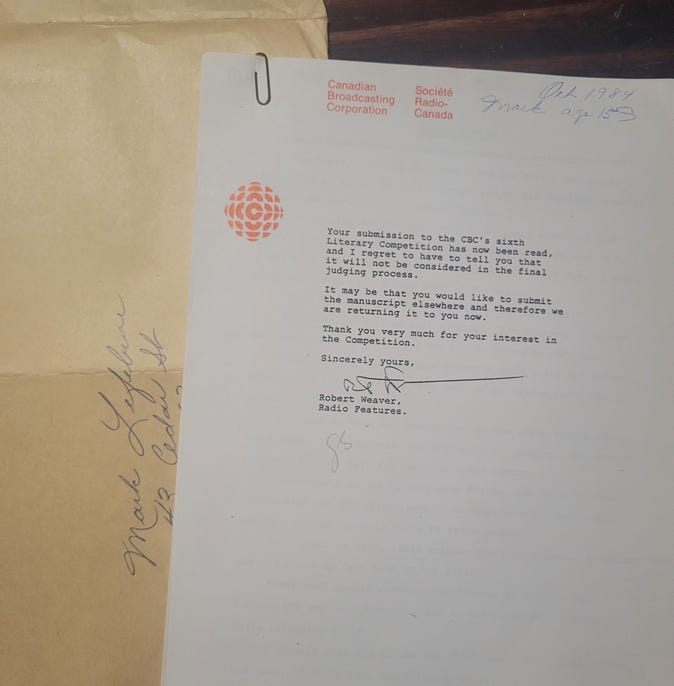
Then I reminded myself at how long I’d been doing this. That I got my first rejection on a horror submission at the age of fifteen in 1984. That after hundreds of other rejections, I finally had my first story published in 1992. And that wasn’t even speculative fiction. It was a YA humor tale. Yes, my first horror story, published the following year, was a horror tale (“Phantom Mitch”) and received honorable mention in The Year’s Best Fantasy and Horror 7. And I published many other horror stories since then. But my first professional sale, in 2001, was, again, a science-fiction tale geared for young readers.
I did work . . . or perhaps painfully claw . . . my way through the horror realm. And I kept publishing short stories. In 2004, I self-published a bunch of those previously published tale into a collection that I called One Hand Screaming. And in the following twenty yeas I’d continued to publish more horror stories such that in 2024, I released a more than twice-the-size 20th anniversary collection called One Hand Screaming: Twenty Haunting Year.
But the majority of my time was still spent in the sports coat. Doling out advice to other writers on the business.
And the Mark Leslie who wrote horror was feeling bitter about that. Like he’d been the overlooked child in the family. Mostly ignored while the Mark Leslie Lefebvre guy got all the attention, the constant spotlight.
That Mark Leslie was jealous of his other half. Bitter and jealous, and determined.
So on that long drive, cycling and spinning in the way we can when we get too deep into our own heads, I made a decision.
It was well past the time for me to invest in Mark Leslie in the proper way. Not as the guy in the back seat who let Mark Leslie Lefebvre drive. But as the guy who took the wheel, dammit. The guy who was going to steer and drive and be in charge.
I was heading to a horror conference. I’d invested into going there and getting more involved in that part of the industry, that aspect of me.
So I made a firm and definitive decision. Mark Leslie Lefebvre wouldn’t show his proud face anywhere near StokerCon. Mark Leslie, the horror guy, would take center stage.
I took that business of writing and publishing guy hat and stuffed it into the back of my pants. Hidden from view. Not to be used or thought of at all during this conference.
And with the Mark Leslie horror-guy hat firmly in place, I arrived in The Steel City.
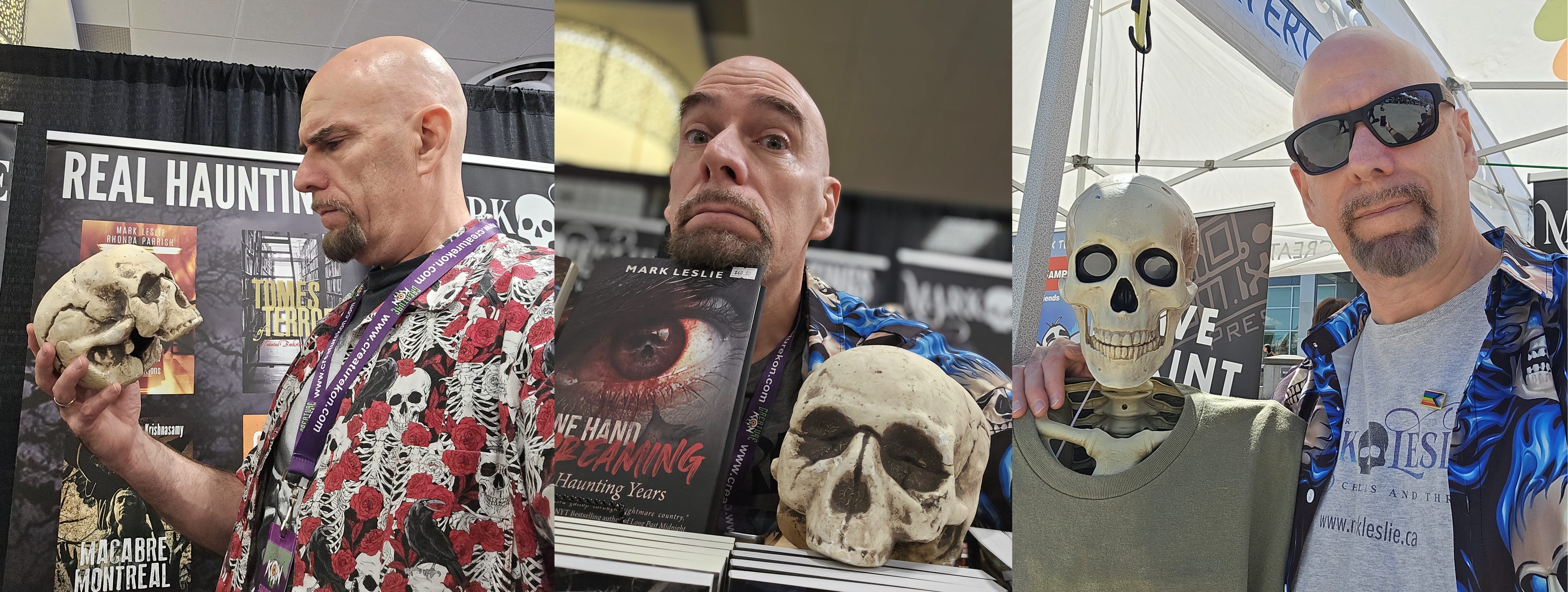
But I wasn’t used to going to a major conference with that hat on. Because despite the determination I kept thinking how long I’d been at this. How long I’d struggled to work my way through the industry. I only had a single horror novel published with a traditional publisher. But that was back in 2014. And while I had a half dozen true ghost story books published between 2011 and 2017, that publisher had decided they didn’t want me anymore.
So those negative feelings, those self-doubts, kept creeping back. I tried to push them away. But I put on a brave face, determined to be Mark Leslie despite that self-doubt. Despite feeling that nobody really ever wants Mark Leslie. They want that other guy in the sport coat.
I was in that self-doubt mode, struggling with the imposter system, but feeling good being among horror people. The Halloween People, as many who attend StokerCon have come to refer to themselves.
Then I was approached by someone who asked if I’d seen the email they’d sent me the previous day. I recognized their name and figured I knew them from the various business of writing cons I’d been to over the years. I said I’d been on the highway all day and hadn’t gotten caught up on emails.
They asked, then, if I might have a moment to talk business.
And my stomach sank.
This was shortly after the time that Draft2Digital announced some policy changes in their attempt to thwart the scammers and slop-generators that were bogging down the system and causing untold labor issues that ultimately reduced the headspace of the publisher operations and customer service teams from being able to focus on helping real authors with their real books.
I, and other representatives from D2D, had spent time taking a lot of heat and mud-slinging over that change from angry authors. (As an industry representative one becomes used to being on the receiving end of angry emotion-sparked authors. It’s simply a part of the landscape).
And so I assumed that was the business this person who’d identified themselves as Jamie wanted to discuss.
I prepared myself for the abuse I figured I was about to receive. As Mark Leslie Lefebvre, the book industry representative. Like I said, I’d become used to it over th years.
So, within the space of the few seconds that Jamie and I walked a couple of steps away from the middle of the crowded lobby area, in my mind, heart, and soul, I took that Mark Leslie hat off, I threw it on the ground, I stomped on it, and then I lit it on fire. And I screamed in frustration that nobody ever wants to interact with Mark Leslie. He’s a loser. Nobody wants him. Nobody likes him. Coming to StokerCon was a huge waste of time and energy.
So I slipped that Mark Leslie Lefebvre hat back on, I put on the bravest smile I could, despite my heart being withered and bruised, and waited to hear what Jamie had to say.
That’s when Jamie Flanagan—because that’s who it was and I hadn’t recognized them—after walking me to a quieter space, told me they wanted to buy my story, “The Scraps of Lives” for the anthology they’d been compiling that was set in the world of Stephen King’s The Shining.
I’m pretty sure that my jaw hit the floor.
And I felt tears begin to well in my eyes.
And that requires another back-tracking sort of back-story.
A few months earlier, I’d seen a call for stories for an authorized collection of tales set in the universe of The Shining. The anthology already had a list of huge horror industry names who’d be writing stories for it. But there were a couple of spots available via an open call that were open to lesser known writers. It was a very short window. And the writers had to be those who’d never been published by one of the big five publisher before.
I saw the call, and considered the option. You see, I’d gotten back into writing short fiction in the previous couple of years. And I would often write a story based on the guidelines for a specific magazine or anthology. And if it didn’t sell to that editor, I could try it again at another market.
But in this case, it was under the IP of Stephen King. I would never be able to sell the story to another market. And what were the chances that I’d even sell a story to such a high-competition market? It’d be a major investment of time and energy. But, I reminded myself, you miss 100% of the shots you don’t take.
So I scrambled to re-read sections of The Shining. I read a few articles about it. I spent some time chewing on ideas. And I came up with something that even drew upon my own previous experience researching for true ghost stories and working in the tourism industry.
I wrote my tale. I submitted it. And as I anticipated the inevitable rejection slip, I was at least proud of how hard I’d worked to write a story I felt had a wonderful combination of heart and shadowy chills. A nice quiet horror tale. Even if I couldn’t use it anywhere once it was rejected, I’d applied myself and made something pretty solid.
I submitted. And within a week I saw an email response.
“Well that was quick,” I muttered as I opened it, expecting to see a rejection. But, instead, it was a notice that the editors liked my story and it was going to make it to the second round of consideration.
I was thrilled. I knew it wouldn’t make it all the way. But at least I’d made it past the first round of rejections. I wore that with pride. I’d impressed the editors enough to not get that R.S. Cool. I could hang my hat on that.
About two months later I received another email. Again, I was resigned it was the inevitable rejection. Because that day I’d been speaking with another writer whose story made it to that second round. But he’d just received his rejection. I’d told him I hadn’t heard yet. And was going to tell him I’d gotten mine too.
But it was a note that my story had made it to the final shortlist.
I was shocked. And thrilled. And honored. I’d made it all that way? Wow! They must have really liked it. But I’d had stories make it that far before, and knew that the odds were ridiculously tiny. Yes, I’m a good writer. A pretty damn good writer. I’ve been doing this a long time. But I’m not the best. There are so many fantastic writers out there much better than me. My odds of making it were infinitesimal. But at least I’d made it that far.
Then, a month later, Jamie Flanagan offered me an acceptance in person.
To say I was shocked would be the understatement of the year.
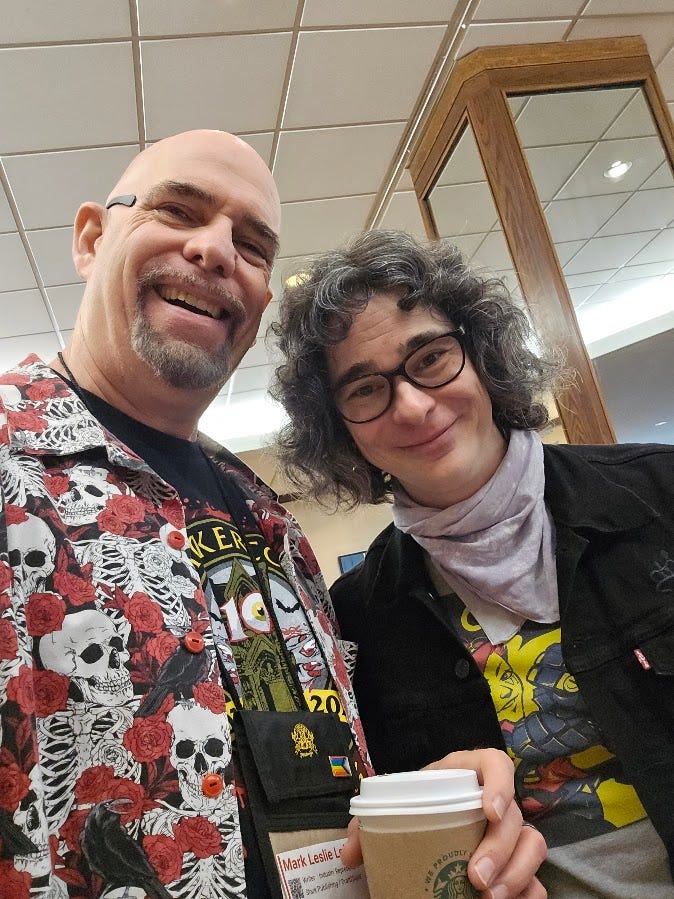
Not only had I resigned myself that my story would never make it, but I’d also, just seconds earlier, convinced myself that nobody wanted Mark Leslie, that I was the world’s biggest loser for ever believing I would be wanted, for wasting my entire life wanting to be something I couldn’t be.
As the tears began to fill my eyes, as Jamie expressed how much they loved my story, the overwhelm was . . . well . . . overwhelming. How’s that for a talented writer struggling with the right words?
But one thing for sure is that I didn’t even have words in that moment. Struggling to find my voice, I asked Jamie if they were a hugger and if it was okay if I hugged them. Because I couldn’t speak, but I could express how I felt in that moment in a hug, a physical manifestation of the way Jamie’s words had hugged my very heart, mind, and soul.
Jamie had absolutely no idea just how much I needed those words. That acceptance. How badly I needed to be seen as a writer in that exact moment.
And it wasn’t just that this was going to be in an anthology that millions of people will be reading—that Stephen King himself was sure to read—and that the money I’d earn on this single story sale would be the most I’d ever get paid for a short story in my life. And more than any full book advance I’d ever received. It was that nod of acceptance. That much needed approval and validation.
Heck, the sale could have been to a small press magazine with a circulation of 100 people and a payment of $25 and it would have landed in a similar fashion.
But it reminded me of a pattern of something I did to myself.
Because I did it all the time.
I remembered it was a little more than a year earlier when a colleague, a Canadian publisher in Hamilton I’d known for a long time reached out to me.
Noelle had asked me to come in to her office to discuss an idea she’d had about publishing a specific type of non-fiction book. It was the type of industry insight thing I get asked about all the time from publishers and authors alike.
So I went in to meet with her and discuss the viability of whether it’d make sense for Wolsak and Wynn to publish a book of ghost stories about the Great Lakes. With that sport coat Mark Leslie Lefebvre hat firmly in place, I did some research, conducted an analysis of the market, looked at numerous comp titles, and came to a conclusion that it would make sense for her imprint to release such a book.
And then, feeling a bit bold, I said that if whoever she had lined up for writing that book didn’t pan out, that I’d be more than happy to step up and give it a shot. That I’d love the opportunity to write such a book.
It felt really bold because, after publishing six books with a different Canadian publisher, and having had my last release with them be a flop—at least compared to the other ones that had all done really well, because they all earned back their advance almost instantly. It took three years for Macabre Montreal to earn back the advance—and then having them say no to two different proposals I’d sent, I was wearing that same imposter syndrome. Nobody wanted Mark Leslie.
Noelle’s response was a surprised laugh.
“Of course I want you to write it!” she said. “Why do you think I asked you?”
Yes, Noelle recognized my book industry savvy. But she didn’t want an industry consultant. She wanted an author with a solid business sense.
And I had been so busy wanting to be useful to a publisher I respected that I never noticed the writer she’d been looking for.
That book became Ghost Stories of the Great Lakes, my latest exploration of haunted locations and unexplainable phenomenon, which is coming out this month. But it’s also, in many ways a bit of a love-letter to the magnificent inland seas that I’ve lived so close to my entire life.
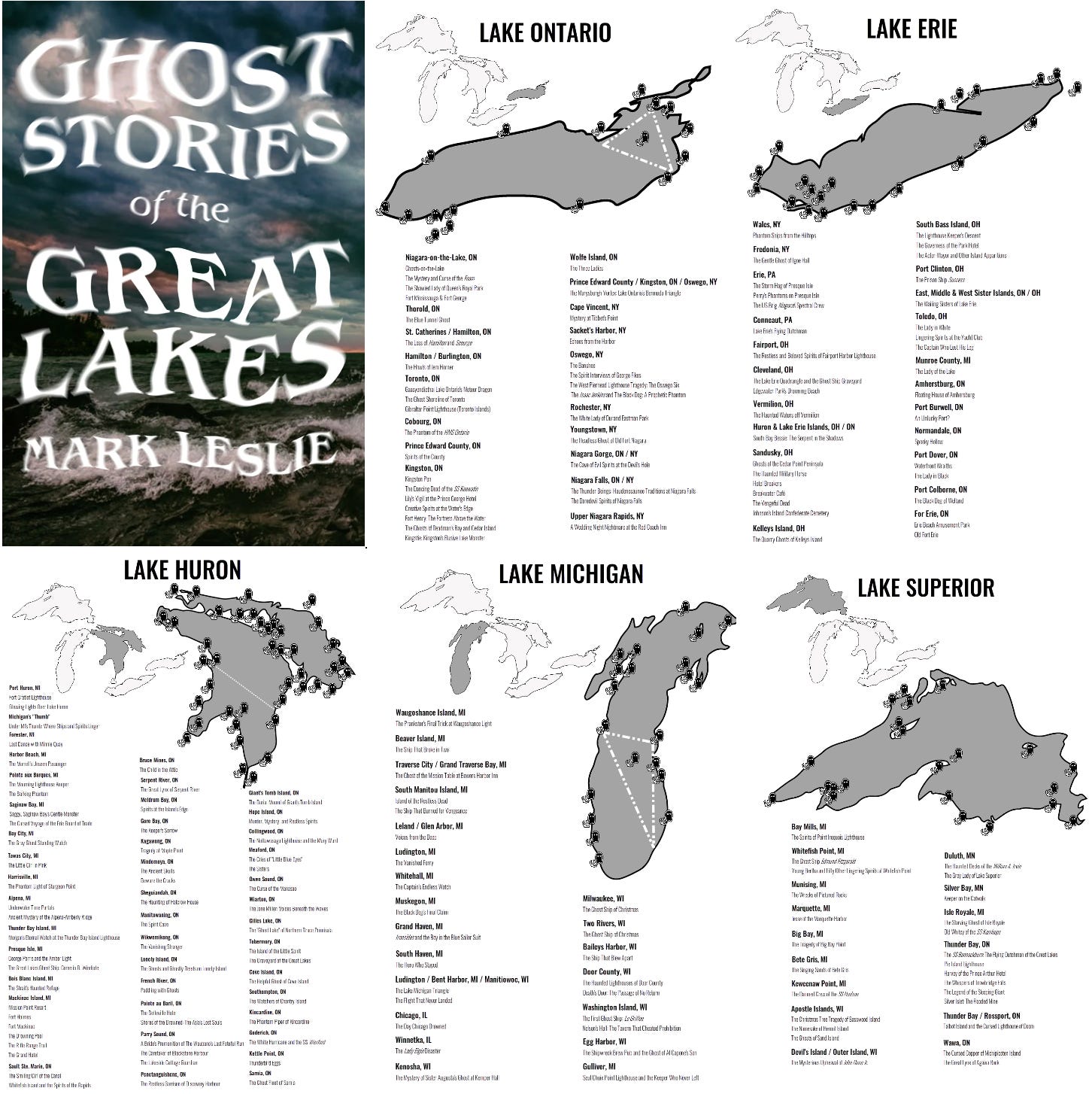
The experience of working with Noelle, and Ashley and the rest of the creative, editorial, and marketing team at Wolsak and Wynn has been a fantastic experience. I’ll likely write more about that experience (and the wonderful experience working with an editor like Jamie and the good folks at Vintage Books on my story in Views from the Overlook) in a future article here.
But the moral of the story—this long and rambling story that I thought might be 500 words but now looks like it’s close to 4,000—is that this pattern of feeling like an imposter, and a loser is a regular pattern for me.
I get in my own way by assuming. And assuming the wrong thing.
I pre-reject myself so that nobody else has to.
And in doing so I might even be missing out on moments when someone is standing right in front of me and seeing Mark Leslie, the writer, and not Mark Leslie Lefebvre, that book industry guy.
I’m not retiring either hat.
I’ll keep wearing that sport coat branded hat straight atop my head, with a big grin on my face and a full heart. Because helping other writers isn’t a consolation prize. It’s a powerful part of who I am. It’s an important half of who I am.
And I’ll also wear that Mark who totes around a skull and has a skeleton mascot.
But I’m sure that I’ll likely continue to struggle with the idea that, before the person I’m interacting with me has spoken, which Mark they came to see.
And that’s okay. Because I love and respect both of them.
And perhaps I’ll get a little bit better, every single day, at not jumping to those negative conclusion. At least not so quickly.
If you’d like the full version of that Stoker Con story, and a long, insightful conversation with editor, author, actor, and scriptwriter Jamie Flanagan, check out Episode 496 of the Stark Reflections Podcast. Jamie is a Bram Stoker Award winner, a writer on such shows as The Haunting of Bly Manor, Midnight Mass, The Fall of the House of Usher and Amazon’s new adaptation of Stephen King’s Carrie. You might even have seen Jamie on screen in some of those, as well as Doctor Sleep, Oculus and more.
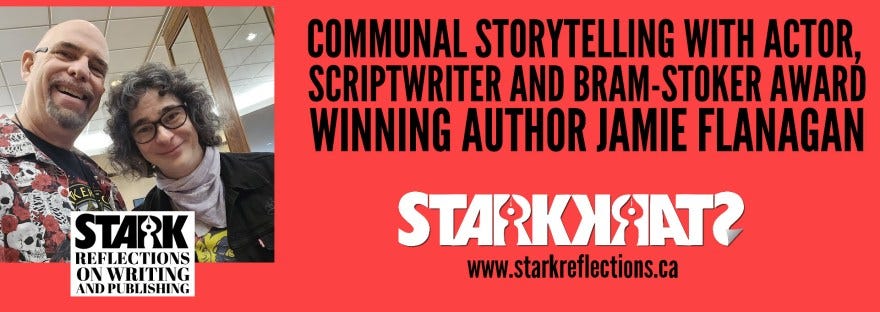
We talk about the dance of adapting a legacy property, the collaborative heart of storytelling, and why adaptation, not imitation, is the sincerest form of flattery.
That conversation is where I primarily wear my Mark Leslie Lefebvre hat, but Jamie is the one, who, during that chat, ensured I acknowledge that Mark Leslie guy too.
And if you want to see my other hat firmly in place, where the guy with the skeleton is front and center, I’ll be starting my promotion of Ghost Stories of the Great Lakes this week. On Wed, Oct 21st at 7 PM I’ll be at Kitchener Public Library’s main branch offering a talk on the Haunted Histories of Ontario, which will include some stories from my latest book and others, and Words Worth Books will be on hand selling copies of the book I’ll be signing.
I’ll also be at the Waterloo Public Library main branch on October 22nd from 6 to 8 PM as part of a local author showcase in collaboration with KW Writer’s Alliance.
I’m at Frightmare in the Falls in Niagara Falls, ON this coming weekend, and will be doing a reading on the night of Sunday October 25 in St. Catharines in the Niagara Arts Centre as part of the Phyllum Reading Series.
And on Monday October 26, 2026 I’ll be at Burlington Public Library doing a talk on Ghost Stories of the Great Lakes with A Different Drummer Books there with books available for sale.
I’ll be the guy proudly wearing the Mark Leslie hat and standing next to a skeleton whose grin will be matching my own beaming smile. I might even be whispering to myself, in that Sally Field-inspired way: “I can’t deny the fact that they like me. Right now, they like me. They really like me.”
HUGE congrats on landing that anthology. And what a deep, raw piece you shared here. Shows heart!
Congratulations and wow can I relate to "pre-rejecting" myself. I call it pre-disqualifying myself. I often don't even let myself get in the running. I so appreciate your vulnerability here. Thank you.