
Where You're Seen, You're Understood, and They Won't Let You Fall
Why Superstars Writing Seminars Might Be the Most Important Investment a Writer Can Make


I came home from Colorado Springs this past Sunday night carrying something far heavier and way more valuable than the stack of business cards in my pocket, the signed books from author friends and industry experts, or the pages of scribbled notes from four days of impactful talks, panels, presentations, and workshops.
I came home carrying a feeling.
It’s the Superstars Writing Seminars feeling.
It’s a feeling that involves being inspired, energized, and motivated to write. But it’s also a very distinct feeling of being loved, of being seen, of being welcomed into a community of compassionate individuals who have your back.
I hugged a lot of people numerous times throughout the several days I spent in Colorado Springs at Superstars Writing Seminars. I suspect I engage in more hugs in the four days of SSWS than I likely average in an entire month. I love hugs. They are something that allows you to effectively give and receive at the same time. And that’s kind of what Superstars has long been for me. It’s a place where I can give; but it’s also a place where I receive back far more than I could ever possibly give.
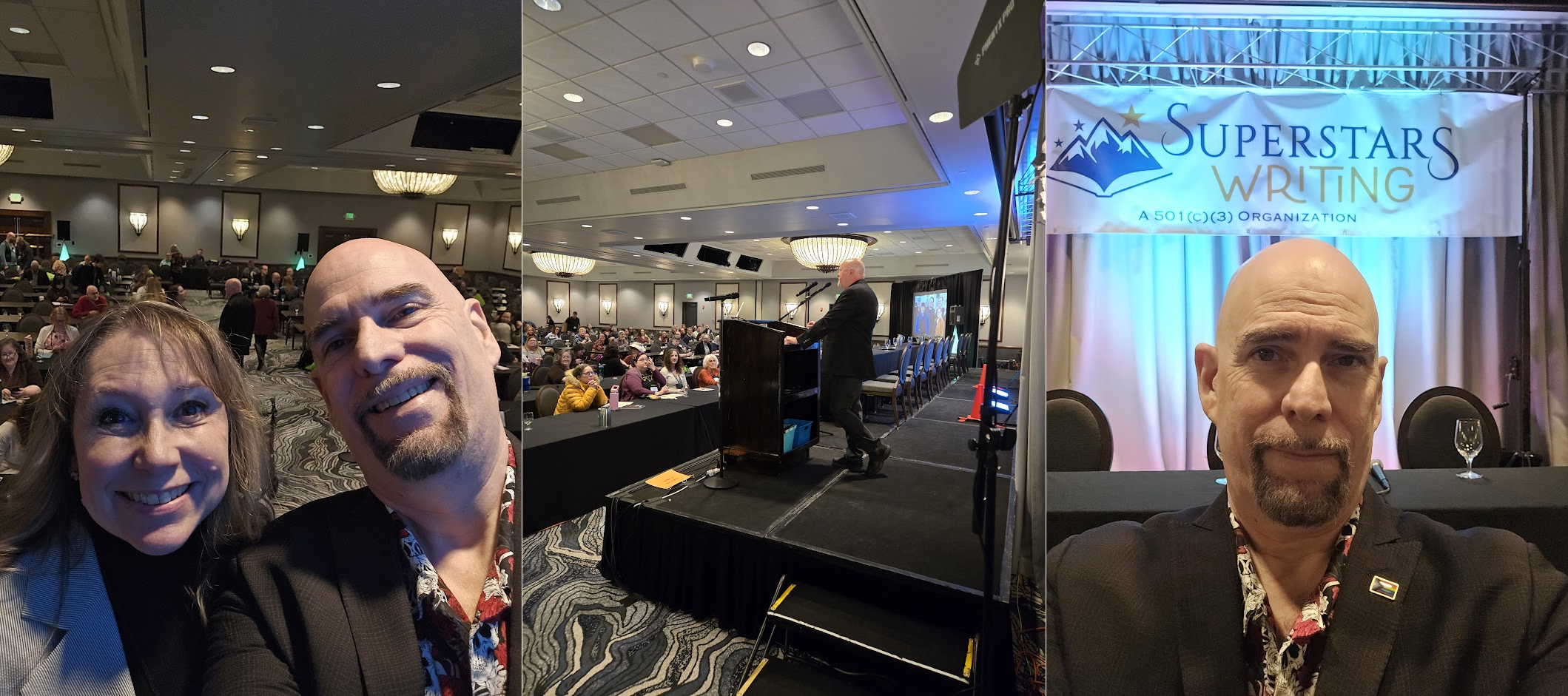
Superstars Writing Seminars is perhaps akin to a giant warm and comforting hug from the type of people who truly see and understand who I am as a writer.
But it’s also the kind of feeling that’s difficult to articulate to anyone who hasn’t experienced it.
The closest I can get is this: imagine spending four days in a room full of people who not only understand the peculiar madness of the writing life but who actively want to help you succeed at it. People who don’t roll their eyes when you talk about your characters like they’re real. People who lean in when you share your goals instead of leaning back with unsolicited warnings about how hard it is to make a living as a writer. People who you know will have your back, and who won’t let you fall.
That’s Superstars Writing Seminars.
And after more than thirty years working in the book industry—as a bookseller, a bookstore manager, a publishing industry representative, and a hybrid author with more than forty books to my name—I can tell you that this conference is unlike anything else out there.
More Than a Conference: An Origin Story
Superstars Writing Seminars was born around the same time that digital publishing was reshaping everything we thought we knew about the industry. Kevin J. Anderson—a writer with millions of copies in print across dozens of languages—saw the tectonic plates shifting and gathered together with Rebecca Moesta, David Farland, Eric Flint, Brandon Sanderson, and Dave Wolverton (AKA David Farland) to figure out, collectively, what was happening and how writers could navigate the changes ahead. James A. Owen, affectionately known as the “adopted son” of this founding group, you joined shortly after the OGs got started became an essential part of the DNA as well.
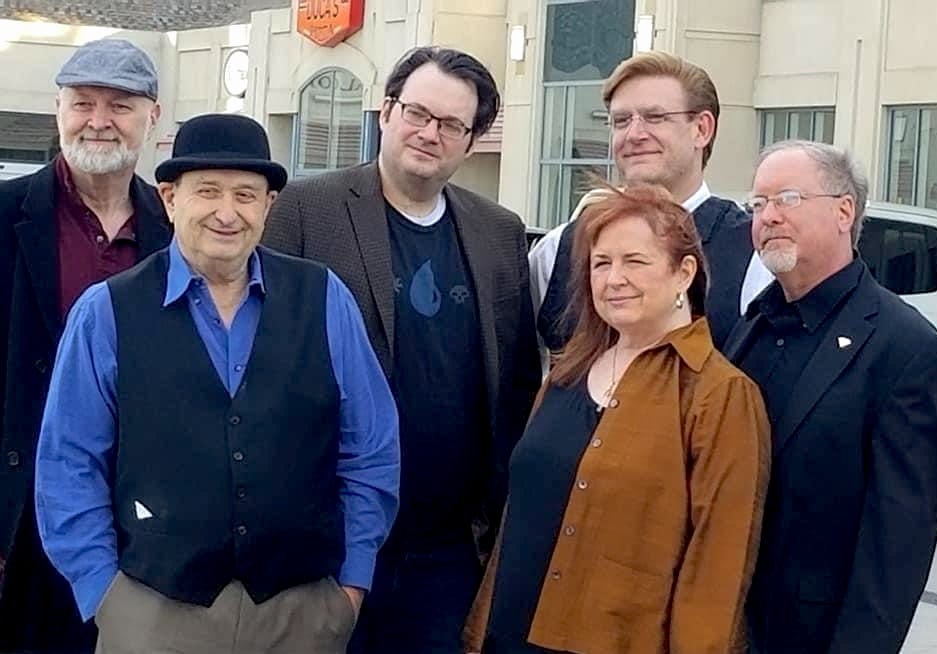
What emerged wasn’t just another writing conference with panels you half-listen to while checking your phone.
What emerged was a curriculum built around the long game—around career sustainability, professional development, and the kind of business education that most writers never receive.
And here’s the part that has always blown me away: these are people with New York Times bestseller lists, millions of copies sold, and publications in dozens of languages, and they’re still showing up to learn. If people at that level recognize the importance of continuing to grow, that tells you something profound about what the rest of us should be doing.
The Tribe
There’s a word that gets used a lot at Superstars, and I want to spend some time on it because it’s the beating heart of the whole experience.
Tribe.
Now, I know what you might be thinking. From the outside, the intensity of the community, the inside language, the fierce loyalty—it might look like something cultish. And I’ll be the first to acknowledge that. But having been part of this community for more than a dozen years, I can tell you what it actually is: a cult of support, respect, and mutual admiration.
I was chatting with a fellow author I’d known for many years who attended Superstars for the first time this past week. Blaze Ward has been around at numerous high-level conferences, workshops, and author mastermind gatherings, so he was far from a newby to the writing and publishing world. But he was new to the SSWS environment. And he described it as being ambushed by kindness.
James A. Owen captured the essence of it when he told a room full of writers something I’ll never forget: They get you, they understand you, and they will not let you fall.
That infrastructure of mutual care isn’t a nice bonus feature of the conference. It’s the foundation. It’s why people come back year after year. It’s why alumni volunteer as mentors. It’s why the long lunches aren’t just a scheduling convenience—they’re programming. The conversations that happen over a meal or in a hallway with a fellow tribe member can be just as transformative as anything that happens on stage.
And it extends far beyond the conference itself. The tribe is a permanent, protective collective—a network you carry with you back to your desk, back to the solitary work of writing, knowing that you’re not actually alone in it.
From “No Politics” to “No Judgment”: A Brave Evolution
One of the things I admire most about Superstars is its willingness to evolve.
For years, the conference operated under a well-intentioned rule: No Politics, No Religion. The idea was to shield the professional environment from the friction of the outside world, to create a space where writers could collaborate without that interference.
But the world changed. And for many attendees, their very existence—their identity, their race, their gender, their orientation—had been made political by forces entirely outside their control.
In that context, a blanket rule against “politics” didn’t create neutrality. It created silence for the people who needed the space most.
That realization was uncomfortable. Growth usually is.
What followed was a meaningful shift, and much of the credit goes to Jayrod Garrett, who asked that their title be changed from “Inclusion and Diversity Coordinator” to Belonging Coordinator.
The distinction matters enormously. I always enjoy my time spent with Jayrod, and we had the chance to discuss this in detail. I love the way they help me see things in a fresh light. Inclusion, Jayrod explained, gives someone a seat at the table. Belonging ensures they’re safe and valued once they sit down. It’s the difference between tolerating someone’s presence and genuinely welcoming who they are.
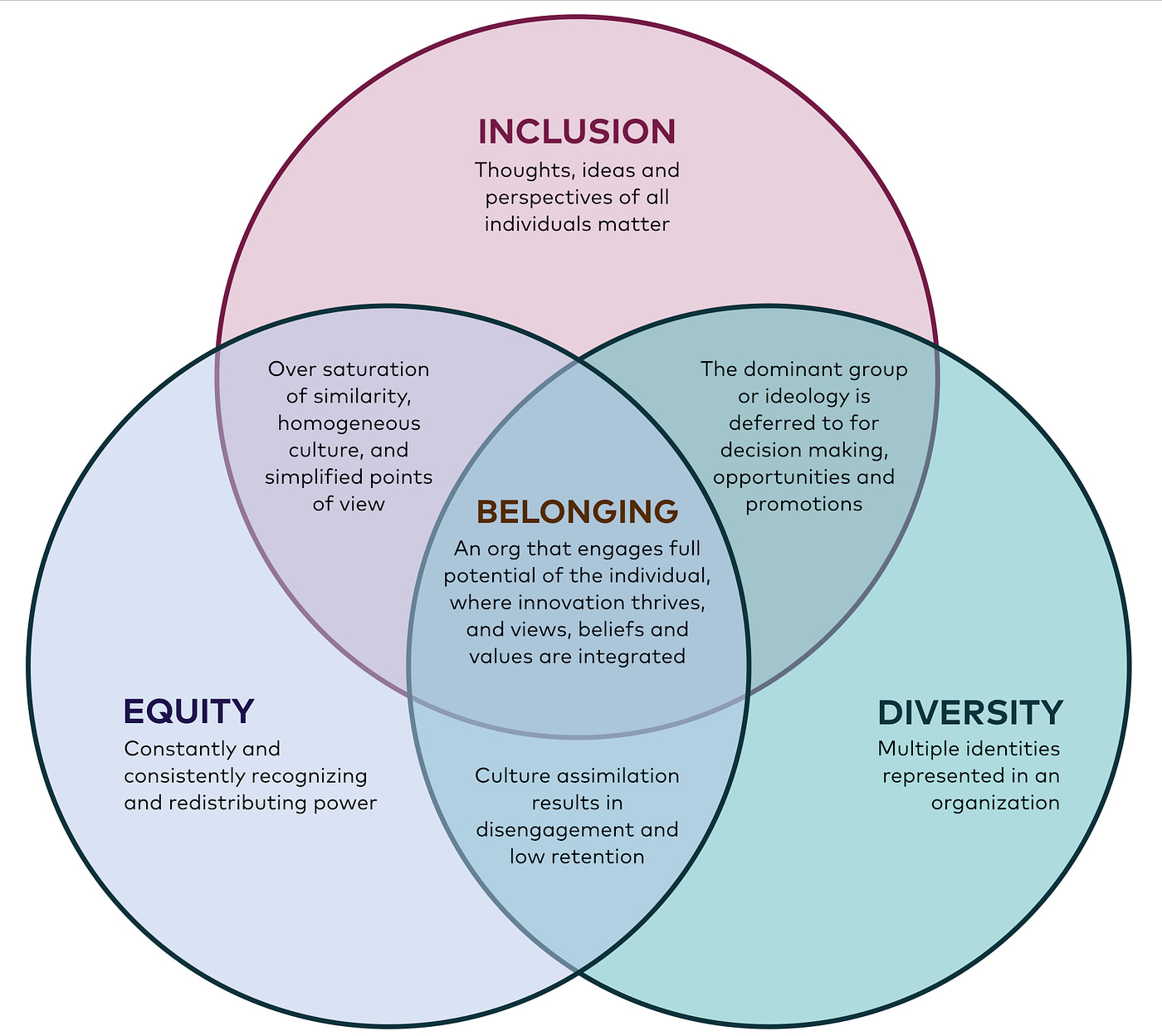
The old rule has been replaced with a new social contract: No Judgment, No Attacks. This directive doesn’t police what topics can be discussed—it focuses on how people treat each other during those discussions. It’s a simple, elegant framework that allows writers to bring their authentic selves to the conference while maintaining the mutual respect that makes the tribe function.
What I continue to reflect upon is the importance of seeking to understand the differences that separate us in order to find the commonalities that unite us.
And that’s not a political position. It’s basic human decency.
Redefining Success (Again and Again)
If there’s one myth that Superstars dismantles with surgical precision, it’s the myth of the overnight success.
During a past Success Panel, several perspectives stood out. Some panelists noted that while six- and seven-figure incomes are absolutely achievable in this industry, they come with a warning against what I’d call toxic sacrifice—the tendency to destroy your personal life, your health, and your happiness in pursuit of a financial metric. If you hit your income target but you’re miserable, did you actually succeed?
Others emphasized the power of celebrating small wins. Those minor victories—a finished draft, a positive review, a new subscriber, a story acceptance—are the fuel that sustains long-term motivation.
Success isn’t a single destination. It’s a series of shifting goalposts that require constant adaptation.
You move from short fiction to novels. From novels to series. From a single income stream to multiple ones. The target is always moving, and that’s not a flaw in the system. That’s the system working.
James A. Owen provided one of my favorite illustrations of this through his Kickstarter for Drawing Out the Dragons. The prevailing wisdom in our industry leans heavily on Kevin Kelly’s famous “1,000 True Fans” theory—the idea that a creator needs a thousand dedicated supporters to sustain a career. Owen funded a major hardcover project with just 137 patrons. One hundred and thirty-seven people who believed in his work deeply enough to back it. That’s a powerful rebuttal to the idea that you need massive numbers to make your creative dreams viable.
Sometimes, a deeply loyal tribe—even a small one—is more than enough.
And that’s something I’ve expressed to authors in various consultations I’ve done with them about their own author business. Because I truly believe that it’s better to have 100 or even 10 firmly committed and loyal newsletter subscribers than 1000 people who just signed up to get a free eBook.
The Marathon, Not the Sprint
There’s a career philosophy that runs through Superstars like a thread through fabric, and it borrows from Neil Peart’s lyrics: the idea that endurance must come first. Before you can achieve anything meaningful, you have to last.

I’ve seen this truth play out across multiple decades in this industry. The writers who are still here, still producing, still thriving—they’re not the ones who sprinted out of the gate and burned white-hot for a season. They’re the ones who paced themselves. Who treated their careers like marathons rather than hundred-meter dashes.
This philosophy pairs beautifully with what I’ve tried to articulate in my own work through The 7 Ps of Publishing Success: Practice, Professionalism, Patience, Progression, Persistence, Partnership, and Patronage (plus Promotion - that bonus P). Every single one of those principles is reinforced at Superstars—not through lectures, but through the lived example of the people who are there.
Protecting the Creative Mind
The creative life demands more than craft skills and business acumen. It demands the active protection of your mental and emotional well-being.
I’ve become a vocal advocate for what I call the social media diet—a deliberate reduction in the consumption of divisive, toxic, doom-scrolling content that drains the creative reservoir. This isn’t about ignoring the world. It’s about recognizing that you cannot pour from an empty cup, and the endless scroll of outrage is one of the fastest ways to empty it.
The week that I was neck deep in presentations, panels, MCing, 1:1 consultations, and in depth conversations about the craft and business of writing with so many amazing people (okay, and also the fun bar-con moments and the Karaoke party hosted by the good folks at Bookfunnel, too), that I didn’t spend much time on social media.
That combination of being with like-minded creatives AND not doom-scrolling, was just the shot of goodness my mental and emotional health needed.
Artist and writer Tanya Hales, who was the guest on Episode 459 of my Stark Reflections podcast, brought something extraordinary to our community through a series of affirmations linked to specific animal imagery on stickers—emotional anchors for the tribe. Your feelings are valid. You are irreplaceable. Your opinions matter. Your best is enough. It’s okay to take a break. You are loved. These aren’t hollow platitudes on an Instagram tile. In the context of a community that knows you, sees you, and has invested in your growth, they land differently. They land like truth.
James Owen did an amazing talk just moments before Tanya presented me with those stickers. It came at the perfect time, because he was talking about the signals that we pull in from the universe. My very short Episode 460: You Are Loved of the podcast had me reflecting on being open to the right signals at the right time and the message on Tanya’s stickers.
Your Brand Is Already Speaking. Are You Listening?
Speaking of signals, one of the presentations I gave a few years back at Superstars focused on author branding, and one of the core messages bears repeating here: your brand isn’t just your book covers and your website. It’s the totality of signals you send to the world—including the ones you’re not consciously choosing.
Rebecca Moesta offers brilliant advice on this front: track the unique, non-writing-related personal facts about yourself that differentiate you from every other author in your genre. For me, it’s things like Barnaby Bones—my life-size skeleton—and my collection of skulls. These quirky personal details have opened doors I never expected, including appearances on morning television and morning radio programs.
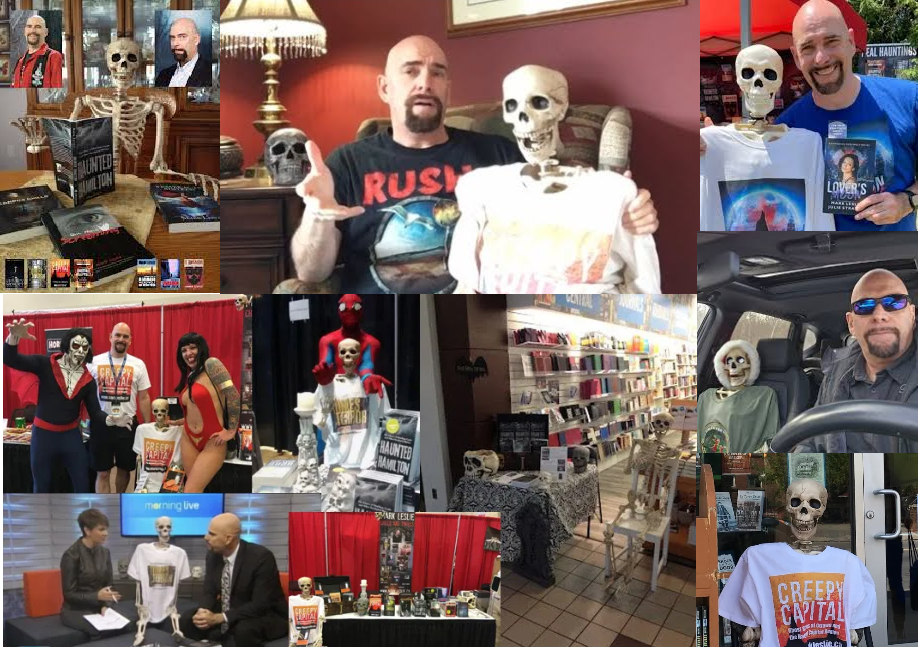
Your “hook” might be a hobby, a background, a passion, or an eccentricity. The point is that readers connect with human beings, not marketing personas.
Champions for Connection
Superstars Writing Seminars is critical to me because it’s something that I carry with me long after the conference ends: writers are champions for bringing people together. Through our stories, we provide the inspiration and imagination necessary for human connection in a world that seems increasingly determined to fragment it.
That’s not a small thing. That’s not a side effect of what we do. That’s the whole point.
In a landscape full of content teaching you how to game algorithms, optimize keywords, and chase trends, Superstars teaches you how to build something that endures. It teaches you details about the ever-evolving landscape of the business of writing and publishing. And it teaches you that authentic storytelling outlasts every platform shift and every market fluctuation. It teaches you that your unique voice—the one only you possess—is your greatest competitive advantage.
And more importantly, it teaches you that you don’t have to do any of it alone.
The Practical Details
Superstars Writing Seminars runs annually in Colorado Springs, Colorado. The 2027 conference takes place February 4–6, with a Skills Day on February 3. It’s an intimate gathering—with a cap of 400 attendees—which means you’re not lost in a sea of thousands. You’re in a room where the instructors know your name, where conversations happen naturally, and where the connections you make are real.
The conference operates as a non-profit, and they offer scholarships to help make attendance possible for writers who might not otherwise be able to attend. They also feature Tribe Talks—short, high-impact presentations delivered by alumni who’ve been mentored through the process—which keeps the content fresh and grounded in current, real-world experience.
If you’ve been looking for a conference that treats you like a professional, invests in your long-term success, and surrounds you with people who will lift you up rather than tear you down, I cannot recommend Superstars highly enough.
Visit superstarswriting.com to learn more about registration, instructors, and what to expect.
Your feelings are valid. You are irreplaceable. Your opinions matter. Your best is enough. It’s okay to take a break. You are loved.
Now go write something extraordinary. Your tribe is waiting.
If you want to listen to me express my feelings about the right signals at the right moment, you might enjoy this short 15-minute long solo “rambling reflections from the road” episode that I recorded after hearing a talk from James Owen and being gifted some remarkable stickers from Tanya Hales. Episode 460 - You Are Loved.
Though I wasn't there in person, I was in spirit! I finished a novella this week. Thinking, if I'm not learning about writing with my favorite tribe, I'd better actually BE writing!
Tribe, cult--which industrial in-group doesn't like pretending to be the illuminati à la masquerade ball?